|
___ ___ ___
|
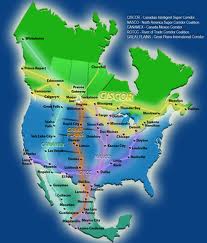
This free-trade zone was
signed by Canada, Mexico, and the United
States and took effect on Jan. 1, 1994. NAFTA
immediately lifted
tariffs on the majority of goods produced by the
signatory nations.
It also calls for the gradual elimination, over a
period of 15 years,
of most remaining barriers to cross-border
investment and to the
movement of goods and services among the three
countries. Major
industries affected include agriculture, automobile
and textile
manufacture, telecommunications, financial
services, energy, and
trucking. NAFTA also provides for labor and
environmental
cooperation among member countries. The pact
contains provisions
for the inclusion of additional member nations.
Labor representatives
have criticized NAFTA, claiming the agreement has
led to numerous
jobs lost in the United States because industries
have moved plants
to Mexico (see maquiladoras ); NAFTA proponents
point to the U.S.
jobs created because of increased imports by Mexico
and Canada.
The agreement has negatively affected the economies
of several
Caribbean countries whose exports to the United
States now compete
with duty-free Mexican exports.
|
